Theodore A. Baroody, N.D., D.C., Ph.D.
Understanding pH
Water is the most abundant compound in the human body, comprising 70% of the body. The body has an acid-alkaline (or acid-base) ratio called the pH which is a balance between positively charges ions (acid-forming) and negatively charged ions (alkaline-forming.) The body continually strives to balance pH. When this balance is compromised many problems can occur.

It is important to understand that we are not talking about stomach acid or the pH of the stomach. We are talking about the pH of the body's fluids and tissues which is an entirely different matter.
Test Your Body's Acidity or Alkalinity with pH Strips:
It is recommended that you test your pH levels to determine if your body's pH needs immediate attention. By using pH test strips, you can determine your pH factor quickly and easily in the privacy of your own home. If your urinary pH fluctuates between 6.0 to 6.5 in the morning and between 6.5 and 7.0 in the evening, your body is functioning within a healthy range. If your saliva stays between 6.5 and 7.5 all day, your body is functioning within a healthy range. The best time to test your pH is about one hour before a meal and two hours after a meal. Test your pH two days a week.
You can get pH test strips at your local pharmacy or order here

Most people who suffer from unbalanced pH are acidic. This condition forces the body to borrow minerals—including calcium, sodium, potassium and magnesium—from vital organs and bones to buffer (neutralize) the acid and safely remove it from the body. Because of this strain, the body can suffer severe and prolonged damage due to high acidity—a condition that may go undetected for years.
Mild acidosis can cause such problems as:
 | Cardiovascular damage, including the
constriction of blood vessels and the reduction of oxygen.
| Weight gain, obesity and diabetes.
| Bladder and kidney conditions, including
kidney stones.
| Immune deficiency.
| Acceleration of free radical damage,
possibly contributing to cancerous mutations.
| Hormone concerns.
| Premature aging.
| Osteoporosis; weak, brittle bones, hip
fractures and bone spurs.
| Joint pain, aching muscles and lactic acid
buildup.
| Low energy and chronic fatigue.
| Slow digestion and elimination.
| Yeast/fungal overgrowth. | |
pH and Bone Loss
A recent seven-year study conducted at the University
of California, San Francisco, on 9,000 women showed that those who have
chronic acidosis are at greater risk for bone loss than those who have
normal pH levels. The scientists who carried out this experiment believe
that many of the hip fractures prevalent among middle-aged women are
connected to high acidity caused by a diet rich in animal foods and low in
vegetables. This is because the body borrows calcium from the bones in order
to balance pH. — American Journal of Clinical Nutrition
Urine pH
Saliva pH
Keeping the Balance Right for Excellent Health
What if I'm Acidic?
What Causes Me to be Acidic?
The reason
acidosis is more common in our
society is mostly due to the
typical American diet, which
is far too high in
acid-producing animal products
like meat, eggs and dairy, and
far too low in
alkaline-producing foods like
fresh vegetables.
Additionally, we eat
acid-producing processed foods
like white flour and sugar and
drink acid-producing beverages
like coffee and soft drinks.
We use too many drugs, which
are acid-forming; and we use
artificial chemical sweetners
like NutraSweet, Equal, or
aspartame, which are extremely
acid-forming. One of the best
things we can do to correct an
overly-acid body is to clean
up the diet and lifestyle.
Refer to the recommended
reading for specific help with
diet and lifestyle.
Alkalinity is relatively rare, but if your urine and/or saliva consistently test above 7.0 pH, start with steps 1, 2 and 3 below and continue adding steps until the desired results are achieved. Be sure to monitor your progress with easy-to-use pH test strips. You will notice that some of these steps are the same as those recommended above for an overly acidic condition. This is because these steps have a buffering effect, or in other words they are balancing, tending to bring the pH back toward normal no matter which direction it has gone:
- Enzymes are essential: Take 1-2 capsules of Food Enzymes with every meal. Also take 1-2 capsules of Protease between meals on an empty stomach.
- Support urinary and lymphatic systems' ability to excrete toxins.
- Correct calcium is needed: Use the type of calcium for your specific urine and saliva pH as outlined in the book The Calcium Kit by Dr Beddoe available at www.advancedideals.org You can't take just ANY calcium product. This is a MUST have book.
- Vitamin C: Use Timed-Release Vitamin C. Use 3,000 mg or more, to maximum bowel tolerance. (If diarrhea occurs, reduce intake.)
- Flax Seed Oil: Use 1 capsules of Flax Seed Oil 3 times a day or 2 tablespoons of Liquid Flax Seed Oil daily.
- Cleanse as needed: Take a psyllium hulls supplement such as Psyllium Hulls at bedtime to maintain regular bowel movements. Use lemon juice and water to cleanse the liver.
| Most Alkaline | Alkaline | Lowest Alkaline | FOOD CATEGORY | Lowest Acid | Acid | Most Acid |
|---|---|---|---|---|---|---|
| Stevia | Maple Syrup, Rice Syrup | Raw Honey, Raw Sugar | SWEETENERS | Processed Honey, Molasses | White Sugar, Brown Sugar | NutraSweet,
Equal, Aspartame,
Sweet 'N Low (These are poisons) |
| Lemons, Watermelon, Limes, Grapefruit, Mangoes, Papayas | Dates, Figs, Melons, Grapes, Papaya, Kiwi, Blueberries, Apples, Pears, Raisins | Oranges, Bananas, Cherries, Pineapple, Peaches, Avocados | FRUITS | Plums, Processed Fruit Juices | Sour Cherries, Rhubarb | Blackberries, Cranberries, Prunes |
| Asparagus, Onions, Vegetable Juices, Parsley, Raw Spinach, Broccoli, Garlic | Okra, Squash, Green Beans, Beets, Celery, Lettuce, Zucchini, Sweet Potato, Carob | Carrots, Tomatoes, Fresh Corn, Mushrooms, Cabbage, Peas, Potato Skins, Olives, Soybeans, Tofu | BEANS VEGETABLES LEGUMES | Cooked Spinach, Kidney Beans, String Beans | Potatoes (without skins), Pinto Beans, Navy Beans, Lima Beans | Chocolate |
| Almonds | Chestnuts | NUTS SEEDS | Pumpkin Seeds, Sunflower Seeds | Pecans, Cashews | Peanuts, Walnuts | |
| Olive Oil | Flax Seed Oil | Canola Oil | OILS | Corn Oil | ||
| Amaranth, Millet, Wild Rice, Quinoa | GRAINS CEREALS | Sprouted Wheat Bread, Spelt, Brown Rice | White Rice, Corn, Buckwheat, Oats, Rye | Wheat, White Flour, Pastries, Pasta | ||
| MEATS | Venison, Cold Water Fish | Turkey, Chicken, Lamb | Beef, Pork, Shellfish | |||
| Breast Milk | Soy Cheese, Soy Milk, Goat Milk, Goat Cheese, Whey | EGGS DAIRY | Eggs, Butter, Yogurt, Buttermilk, Cottage Cheese | Raw Milk | Cheese, Homogenized Milk, Ice Cream | |
| Herb Teas, Lemon Water | Green Tea | Ginger Tea | BEVERAGES | Tea | Coffee | Beer, Soft Drinks |
Note that a food's acid or alkaline-forming tendency in the body has nothing to do with the actual pH of the food itself. For example, lemons are very acidic, however the end-products they produce after digestion and assimilation are very alkaline so lemons are alkaline-forming in the body. Likewise, meat will test alkaline before digestion but it leaves very acidic residue in the body so, like nearly all animal products, meat is very acid-forming.
Coral Calcium. Coral Calcium is also the most alkalizing form of calcium, which is great for helping to neutralize the acid buildup in the body tissues that results from consumption of proteins.
Water, The chemistry of life
Whenever we attempt to determine whether there is life as we know it on Mars or other planets, scientists first seek to establish whether or not water is present. Why? Because life on earth totally depends on water. A High percentage of living things, both plant and animal, are found in water. All life on earth is thought to have arisen from water. The bodies of all living organisms are composed largely of water. About 70 to 90 percent of all organic matter is water.
The chemical reactions in all plants and animals that support life take place in a water medium. Water not only provides the medium to make these life sustaining reactions possible, but water itself is often an important reactant or product of these reactions. In short, the chemistry of life is water chemistry.
Water, the universal solvent
Water is a universal, superb solvent due to the marked polarity of the water molecule and its tendency to form hydrogen bonds with other molecules. One water molecule expressed with the chemical symbol H2O, consists of 2 hydrogen atoms and 1 oxygen atom.
Standing alone, the hydrogen atom contains one positive proton at its core with one negative electron revolving around it in a three-dimensional shell. Oxygen, on the other hand, contains 8 protons in its nucleus with 8 electrons revolving around it. This is often shown in chemical notation as the letter O surrounded by eight dots representing 4 sets of paired electrons.
The single hydrogen electron and the 8 electrons of oxygen are the key to the chemistry of life because this is where hydrogen and oxygen atoms combine to form a water molecule or split to form ions. Hydrogen tends to ionize by losing its single electron and form single H+ ions which are simply isolated protons since the hydrogen atom contains no neutrons. A hydrogen bond occurs when the electron of a single hydrogen atom is shared with another electronegative atom such as oxygen that lacks an electron.
Polarity of water molecules
In a water molecule, two hydrogen atoms are covalently bonded to the oxygen atom. But because the oxygen atom is larger than the hydrogen's, its attraction for the hydrogen's electrons is correspondingly greater so the electrons are drawn closer into the shell of the larger oxygen atom and away from the hydrogen shells. This means that although the water molecule as a whole is stable, the greater mass of the oxygen nucleus tends to draw in all the electrons in the molecule including the shared hydrogen electrons giving the oxygen portion of the molecule a slight electronegative charge.
The shells of the hydrogen atoms, because their electrons are closer to the oxygen, take on a small electropositive charge. This means water molecules have a tendency to form weak bonds with water molecules because the oxygen end of the molecule is negative and the hydrogen ends are positive.
A hydrogen atom, while remaining covalently bonded to the oxygen of its own molecule, can form a weak bond with the oxygen of another molecule. Similarly, the oxygen end of a molecule can form a weak attachment with the hydrogen ends of other molecules. Because water molecules have this polarity, water is a continuous chemical entity.
These weak bonds play a crucial role in stabilizing the shape of many of the large molecules found in living matter. Because these bonds are weak, they are readily broken and re-formed during normal physiological reactions. The disassembly and re-arrangement of such weak bonds is in essence the chemistry of life.
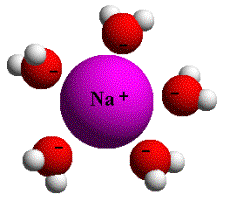
To illustrate water's ability to break down other substances, consider the simple example of putting a small amount of table salt in a glass of tap water. With dry salt (NaCl) the attraction between the electropositive sodium (Na+) and electronegative chlorine (Cl-) atoms of salt is very strong until it is placed in water. After salt is placed in water, the attraction of the electronegative oxygen of the water molecule for the positively charged sodium ions and the similar attraction of the electropositive hydrogen ends of the water molecule for the negatively charged chloride ions are greater than the mutual attraction between the outnumbered Na+ and Cl- ions. In water, the ionic bonds of the sodium chloride molecule are broken easily because of the competitive action of the numerous water molecules.
As we can see from this simple example, even the delicate configuration of individual water molecules enables them to break relatively stronger bonds by converging on them. This is why we call water the universal solvent. It is a natural solution that breaks the bonds of larger, more complex molecules. This is the chemistry of life on earth, in water and on land. Oxidation-reduction reactions
Basically, reduction means the addition of an electron (e-), and its converse, oxidation means the removal of an electron. The addition of an electron, called reducttion, stores energy in the reduced compound. The removal of an electron, called oxidation, liberates energy from the oxidized compound. Whenever one substance is reduced, another is oxidized.
To clarify these terms, consider any two molecules, A and B, for example.
When molecules A and B come into contact, here is what happens:
B grabs an electron from molecule A. Molecule A has been oxidized because it has lost an electron.
The net charge of B has been reduced because it has gained a negative electron (e-).
In biological systems, removal or addition of an electron constitutes the most frequent mechanism of oxidation-reduction reactions. These oxidation-reduction reactions are frequently called redox reactions.
Acids and Bases
An acid is a substance that increases the concentration of hydrogen ions (H+) in water. A base is a substance that decreases the concentration of hydrogen ions, in other words, increasing the concentration of hydroxide ions OH-.
The degree of acidity or alkalinity of a solution is measured in terms of a value known as pH, which is the negative logarithm of the concentration of hydrogen ions: pH = 1/log[H+] = -log[H+]
What is pH?
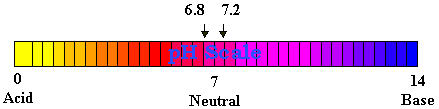
On the pH scale, which ranges from 0 on the acidic end to 14 on the alkaline end, a solution is neutral if its pH is 7. At pH 7, water contains equal concentrations of H+ and OH- ions. Substances with a pH less than 7 are acidic because they contain a higher concentration of H+ ions. Substances with a pH higher than 7 are alkaline because they contain a higher concentration of OH- than H+. The pH scale is a log scale so a change of one pH unit means a tenfold change in the concentration of hydrogen ions.
Importance of balancing pH
Living things are extremely sensitive to pH and function best (with certain exceptions, such as certain portions of the digestive tract) when solutions are nearly neutral. Most interior living matter (excluding the cell nucleus) has a pH of about 6.8.
Blood plasma and other fluids that surround the cells in the body have a pH of 7.2 to 7.3. Numerous special mechanisms aid in stabilizing these fluids so that cells will not be subject to appreciable fluctuations in pH. Substances that serve as mechanisms to stabilize pH are called buffers. Buffers have the capacity to bond ions and remove them from solution(s) whenever their concentration begins to rise. Conversely, buffers can release ions whenever their concentration begins to fall. Buffers thus help to minimize the fluctuations in pH. This is an important function because many biochemical reactions normally occurring in living organisms either release or use up ions.
Oxygen: Too much of a good thing?
Oxygen is essential to survival. It is relatively stable in the air, but when too much is absorbed into the body it can become active and unstable and has a tendency to attach itself to any biological molecule, including molecules of healthy cells. The chemical activity of these free radicals is due to one or more pairs of unpaired electrons. About 2% of the oxygen we normally breathe becomes active oxygen, and this amount increases to approximately 20% with aerobic exercise.
Such free radicals with unpaired electrons are unstable and have a high oxidation potential, which means they are capable of stealing electrons from other cells. This chemical mechanism is very useful in disinfectants such as hydrogen peroxide and ozone which can be used to sterilize wounds or medical instruments. Inside the body these free radicals are of great benefit due to their ability to attack and eliminate bacteria, viruses and other waste products.
Active Oxygen in the body
Problems arise, however, when too many of these free radicals are turned loose in the body where they can also damage normal tissue.
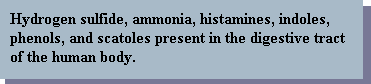
Putrefaction sets in when microbes in the air invade the proteins, peptides, and amino acids of eggs, fish and meat. The result is an array of unpleasant substances such as:
Hydrogen sulfide
Ammonia
Histamines
Indoles
Phenols
Scatoles
These substances are also produced naturally in the digestive tract when we digest food which results in the unpleasant odor evidenced in feces. Putrefaction of spoiled food is caused by microbes in the air; this natural process is duplicated in the digestive tract by intestinal microbes. All these waste products of digestion are pathogenic, that is, they can cause disease in the body.
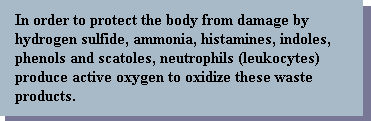
Hydrogen sulfide and ammonia are tissue toxins that can damage the liver. Histamines contribute to allergic disorders such as atopic dermatitis, urticaria (hives) and asthma. Indoles and phenols are considered carcinogenic. Because waste products such as hydrogen sulfide, ammonia, histamines, phenols and indoles are toxic, the body's defense mechanisms try to eliminate them by releasing neutrophils (a type of leukocyte, or white corpuscle). These neutrophils produce active oxygen, oddball oxygen molecules that are capable of scavenging disintegrating tissues by gathering electrons from the molecules of toxic cells.
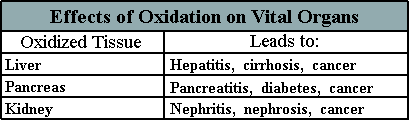
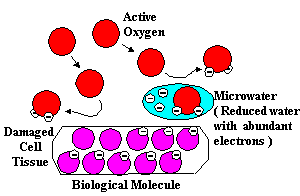
Problems arise, however, when too many of these active oxygen molecules or free radicals are produced in the body. They are extremely reactive and can also attach themselves to normal, healthy cells and damage them genetically. These active oxygen radicals steal electrons from normal, healthy biological molecules. This electron theft by active oxygen oxidizes tissue and can cause disease.
Because active oxygen can damage normal tissue, it is essential to scavenge this active oxygen from the body before it can cause disintegration of healthy tissue. If we can find an effective method to block the oxidation of healthy tissue by active oxygen, then we can attempt to prevent disease.
Antioxidants block dangerous oxidation
One way to protect healthy tissue from the ravages of oxidation caused by active oxygen is to provide free electrons to active oxygen radicals, thus neutralizing their high oxidation potential and preventing them from reacting with healthy tissue.
Research on the link between diet and cancer is far from complete, but some evidence indicates that what we eat may affect our susceptibility to cancer. Some foods seem to help defend against cancer, others appear to promote it. Much of the damage caused by carcinogenic substances in food may come about because of an oxidation reaction in the cell. In this process, an oddball oxygen molecule may damage the genetic code of the cell. Some researchers believe that substances that prevent oxidation -- called ANTIOXIDANTS -- can block the damage. This leads naturally to the theory that the intake of natural antioxidants could be an important aspect of the body's defense against cancer. Substances that some believe inhibit cancer include vitamin C, vitamin E, beta-carotene, selenium, and gluthione (an amino acid). These substances are reducing agents. They supply electrons to free radicals and block the interaction of the free radical with normal tissue.
How we can avoid illness
As we mentioned earlier, the presence of toxic waste products such as hydrogen sulfide, ammonia, histamines, indoles, phenols and scatoles impart an offensive odor to human feces. In the medical profession, it is well known that patients suffering from hepatitis and cirrhosis pass particularly odoriferous stools. Excessively offensive stools caused by the presence of toxins are indicators of certain diseases, and the body responds to the presence of these toxins by producing neutrophil leukocytes to release active oxygen in an attempt to neutralize the damage to organs that can be caused by such waste products. But when an excess amount of such active oxygen is produced, it can damage healthy cells as well as neutralize toxins. This leads us to the conclusion that we can minimize the harmful effect of these active oxygen radicals by reducing them with an ample supply of electrons.
Water, the natural solution
There is no substitute for a healthy balanced diet, especially rich in antioxidant materials such as vitamin C, vitamin E, beta-carotene, and other foods that are good for us. However, these substances are not the best source of free electrons that can block the oxidation of healthy tissue by active oxygen.
Water treated by electrolysis to increase its reduction potential is the best solution to the problem of providing a safe source of free electrons to block the oxidation of normal tissue by free oxygen radicals. We believe that reduced water, water with an excess of free electrons to donate to active oxygen, is the best solution because:
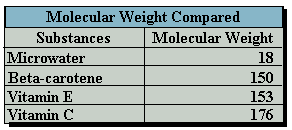
The reduction potential of water can be dramatically increased over other antioxidants in food or vitamin supplements. The molecule weight of reduced water is low, making it fast acting and able to reach all tissues of the body in a very short time.
What is IONIZED WATER?
Ionized water is the product of mild electrolysis which takes place in the ionized water unit. The production of ionized water, its properties, and how it works in the human body are described in the next section. Ionized water is treated tap water that has not only been filtered, but has also been reformed in that it provides reduced water with a large mass of electrons that can be donated to active oxygen in the body to block the oxidation of normal cells.
THE ALKALINE IONIZED WATER UNIT
Tap water: What it is and isn't
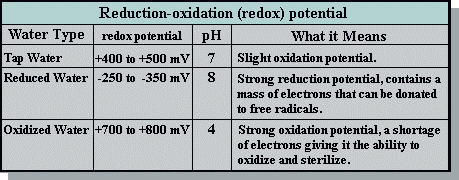
Normal tap water, for example, with a pH of 7 is approximately neutral on the pH scale of 0 to 14. When measured with an ORP (oxidation potential) meter, its redox potential is approximately +400 to +500 mV. Because it has a positive redox potential, it is apt to acquire electrons and oxidize other molecules. Reduced Ionized Water, on the other hand, has a negative redox potential of approximately -250 to -350 mV. This means it has a large mass of electrons ready to donate to electron-thieving active oxygen.
Before discussing the properties of Ionized Water further, let's take a look at what happens inside an Ionized Water producing unit.
How an IONIZING WATER Unit works
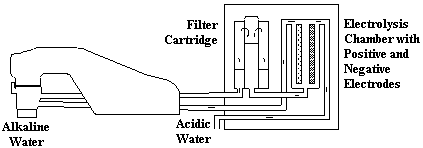
The Ionized Water unit, slightly taller and thicker than a large dictionary on end, is an electrical appliance connected to your kitchen water supply to perform electrolysis on tap water before you drink it or use it in the kitchen for cooking or cleaning.
A special attachment re-directs tap water out of the faucet through a plastic hose into the Ionized Water unit. Inside the Ionized Water unit, the water is first filtered through activated charcoal. Next, the filtered water passes into an electrolysis chamber equipped with a platinum-coated titanium electrode where electrolysis takes place.
Cations, positive ions, gather at the negative electrodes to create cathodic water (reduced water). Anions, negatively charged ions, gather at the positive electrode to make anodic water (oxidized water).
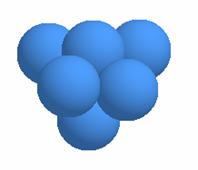
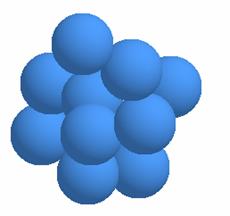
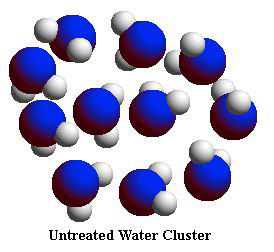
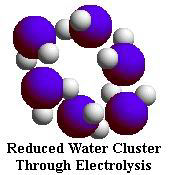
Through electrolysis, reduced water not only gains an excess amount of electrons (e-), but the cluster of H 2O seem to be reduced in size from about 10 to 13 molecules per cluster to 5 to 6 molecules per cluster.
The reduced water comes out of the faucet, and the oxidized water comes out of a separate hose leading into the sink. You can use the reduced water for drinking or cooking. The oxidation potential of the oxidized water makes it a good sterilizing agent, ideal for washing hands, cleaning food or kitchen utensils, and treating minor wounds.
What the IONIZED WATER Unit Produces
Redox potential comparison
After electrolysis of the water inside the Ionized Water unit, reduced water comes out of the cathodic side and oxidized water comes out of the anodic side. Compare these measurements of these three types of water: tap water before electrolysis, the reduced water, and the oxidized water.
Redox potential, not pH, is the crucial factor
Traditionally we have judged the properties of water from the standpoint of pH, in other words, whether water is acidic or alkaline. According to Dr. Yoshiaki Matsuo PhD., the inventor of the Ionized Water unit, "In my opinion, redox potential is more important than pH. The importance of pH is over emphasized. For example, the average pH of blood is 7.4 and acidosis or alkalosis are defined according to deviation within the range of 7.4 +- 0.005. But nothing has been discussed about ORP, or oxidation-reduction potential."
The pH of tap water is about pH 7, or neutral. When tap water is electrolyzed into Ionized Water, its reduced water has a pH of about 9 and the oxidized water a pH of about 4. Even if you make alkaline water of pH 9 by adding sodium hydroxide or make acidic water of pH 3 by adding hydrogen chloride, you will find very little change in the ORP values of the two waters. On the other hand, when you divide tap water with electrolysis you can see the ORP fluctuate by as much as +- 1,000 mV. By electrolysis we can obtain reduced water with negative potential that is good for the body.
USING ALKALINE IONIZED WATER
What IONIZED WATER Does
The Ionized Water unit produces two kinds of water with different redox potentials, one with a high reduction potential and the other with a high oxidation potential.
Reduced Water
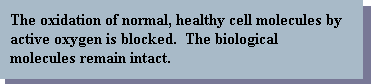
When taken internally, the reduced Ionized Water with its redox potential of -250 to -350 mV readily donates its electrons to oddball oxygen radicals and blocks the interaction of the active oxygen with normal molecules.
A biological molecule (BM) remains intact and undamaged.
Undamaged biological molecules are less susceptible to infection and disease. Ionized Water gives up an extra electron and reduces the active oxygen (AO), thus rendering it harmless. The AO is reduced without damaging surrounding biological molecules. Substances which have the ability to counteract active oxygen by supplying electrons are called scavengers. Reduced water, therefore, can be called scavenging water.
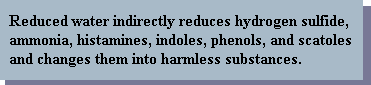
When taken internally, the effects of reduced water are immediate. Ionized Water inhibits excessive fermentation in the digestive tract by reducing indirectly metabolites such as hydrogen sulfide, ammonia, histamines, indoles, phenols and scatoles, resulting in a cleaner stool within days after reduced water is taken on a regular basis. In 1965, the Ministry of Welfare of Japan announced that reduced water obtained from electrolysis can prevent abnormal fermentation of intestinal microbes.
Oxidized Water
Oxidized water with its redox potential of +700 to +800 mV is an oxidizing agent that can withdraw electrons from bacteria and kill them. The oxidized water from the Ionized Water unit can be used to clean hands, kitchen utensils, fresh vegetables and fruits, and to sterilize cutting boards and minor wounds. Tests have shown that oxidized water can be used effectively to treat athlete's foot, minor burns, insect bites, scratches, and so on.
Dr. Yoshiaki Matsuo, Vice Director of the Water Institute of Japan, has developed another apparatus capable of producing hyperoxidized water with a redox potential of +1,050 mV or more, and a pH lower than 2.7. Tests have shown that this hyper oxidized water can quickly destroy MRSA (Methecillin Resistant Staphylococcus Aureus).
Although hyperoxidized water is a powerful sterilizing agent, it won't harm the skin. In fact, it can be used to heal. Hyperoxidized water has proven effective in Japanese hospitals in the treatment of bedsores and operative wounds with complicated infections. But perhaps the most exciting future application of hyperoxidized water is in the field of agriculture where it has been used effectively on plants to kill fungi and other plant diseases. Hyperoxidized water is non-toxic, so agricultural workers can apply it without wearing special protective equipment because there is no danger of skin or respiratory damage. An added benefit of using hyperoxidized water to spray plants is that there is no danger to the environment caused by the accumulation of toxic chemicals in the ground.
Alkaline Ionized Water Superior to Antioxidant Diet
Today we read much about correct dieting principles and paying attention to what we eat in order to stay healthy. This is a sensible practice, but it is surprising that many of us don't realize that the bulk of what eat is composed of water. Vegetables and fruits are 90% water; fish and meat are about 70% water as well. Even advocates of the importance of vitamin C in diet staples have to admit that its potency, namely, the redox potential of this important vitamin, rapidly diminishes with age and preparation for the dining table. Carbohydrates, the main constituent of vegetables and fruit, has a molecular weight of 180 whereas water has a much lower molecular weight of 18.
Alkaline Ionized Water with its low molecular weight and high reduction potential makes it a superior scavenging agent of active oxygen. But electrolysis inside the Ionized Water unit not only charges the reduced water with electrons, but it also reduces the size of reduced water molecule clusters.
NMR (Nuclear Magnetic Resonance) analysis reveals that tap water and well water consists of clusters of 10 to 13 H2 0 molecules. Electrolysis of water in the Ionized Water unit reduces these clusters to about half their normal size -- 5 to 6 water molecules per cluster.
As the graph shows, the NMR signal that measures cluster size by line width at half-amplitude shows 65 Hz for reduced water and 133 Hz for tap water, revealing that the reduced water clusters are approximately half the size of tap water clusters.
This is why Ionized Water is more readily absorbed by the body than untreated tap water. Ionized Water quickly permeates the body and blocks the oxidation of biological molecules by donating its abundant electrons to active oxygen, enabling biological molecules to replace themselves naturally without damage caused by oxidation that can cause diseases.
SUMMARY AND CONCLUSIONS
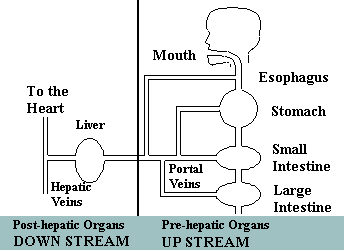
Upstream and Downstream Theory
Prevent disease at the source
According to Dr. Hidemitsu Hayashi, Director of the Water Institute of Japan, "To eliminate the pollutants in a large stream that is contaminated at its source, we must work on the problems upstream at the headwaters -- the source of the pollution -- not downstream where we can only try to treat the evidence of damage caused by the pollution. Ionized Water's contribution to preventive medicine is essentially upstream treatment."
Upstream
According to our model, we consider the digestive tract upstream where we intake water and food. Although many people today in developed countries are growing more skeptical about what they eat, they tend to concentrate more on what the food contains rather than the metabolized products of foods in the digestive tract.
Upstream
For example, consider the typical balanced diet of meat and vegetables. Meat protein is metabolized into amines while nitrates from fertilizers used to grow vegetables metabolize into nitrites in the digestive tract. These amines and nitrites combine to form nitrosamine, a recognized carcinogen.
We've already discussed that odoriferous feces are evidence of excessive fermentation in the digestive tract, and thus reduced water performs a very important function upstream in the digestive tract by reducing this excessive fermentation as evidenced by cleaner stools within days of starting a steady regimen of reduced water.
Downstream
Downstream
Downstream from the digestive tract, starting at the liver, reduced water quickly enters the liver and other organs due to, first, its lower molecular weight, and, secondly, the size of its clusters. At tissue sites throughout the body, reduced water with its safe, yet potent reduction potential readily donates its passenger electrons freely to active oxygen and neutralizes them so they cannot damage the molecules of healthy cells. Normal cells are protected from the electron thievery of active oxygen and allowed to grow, mature, function and regenerate without interference from rogue, oddball oxygen or acid radicals which tend to steal the electrons from the molecules of normal, healthy biological molecules.
The water boom
We are now in the midst of a water boom. In Japan and other countries, consumers are buying various kinds of bottled and canned water even though water is one of our most abundant vital resources. Research data reveals that mineral waters have an ORP of +200 mV, slightly lower than the +400 mV measured for ordinary tap water. We can say that mineral water is at least marginally better than tap water from the viewpoint of ORP. Compared to any processed water for sale, however, Alkaline Ionized Water that has been structured, with its reduction potential of -250 to -300 mV is beyond comparison due to its ability to scavenge active oxygen or acid radicals.